
Biovortex is the newest teamLab installation in Japan and it might be a new favourite of mine. It’s located in Kyoto, not that far from the main station, and while the Kansai area does have a couple of smaller outdoor installations, this is the first large indoor space for teamLab here AND it’s actually the biggest in the whole of Japan.
All teamLab museums and installations are interactive and require participation from you as an observer or participant to function. The art changes depending on the actions you take or how you see it at the time you do. Therefore the artwork is never the same twice. Biovortex is made up of zones over 4 floors with some being brand new and others replicated from other locations. I’ll concentrate on the main new elements in this one but I will mention some of the repeat spots, so if you want to check out those in more detail, take a look at my posts from Tokyo’s Borderless and Planets and Osaka’s Botanical Garden.
Floor 1 – Underground
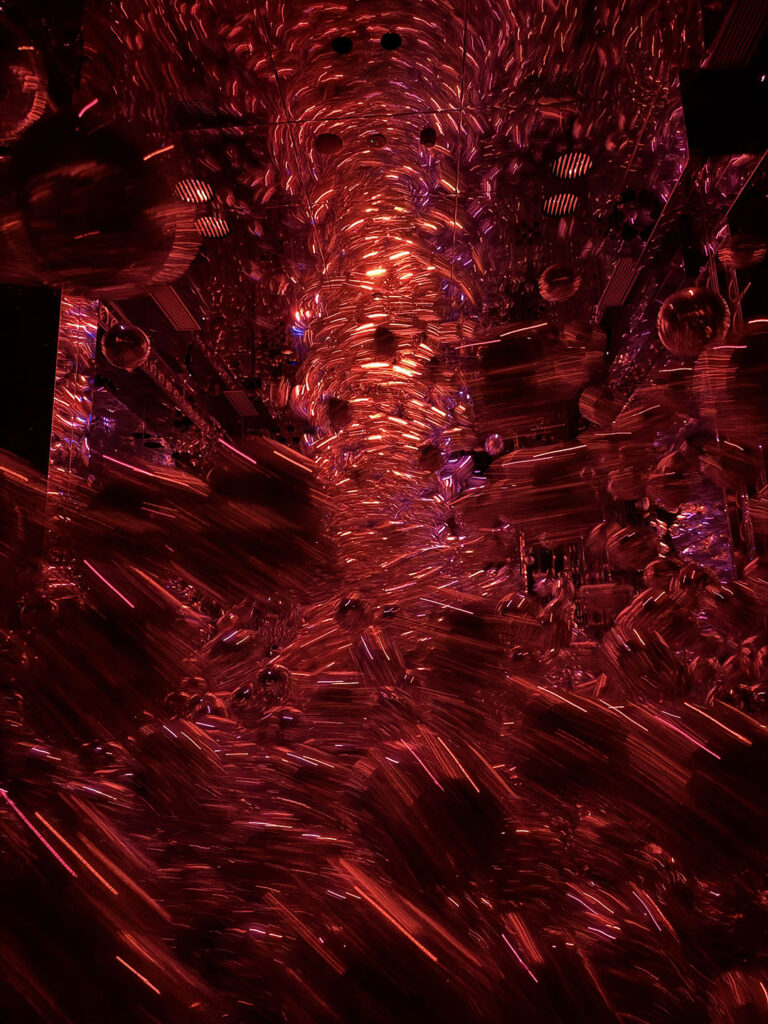
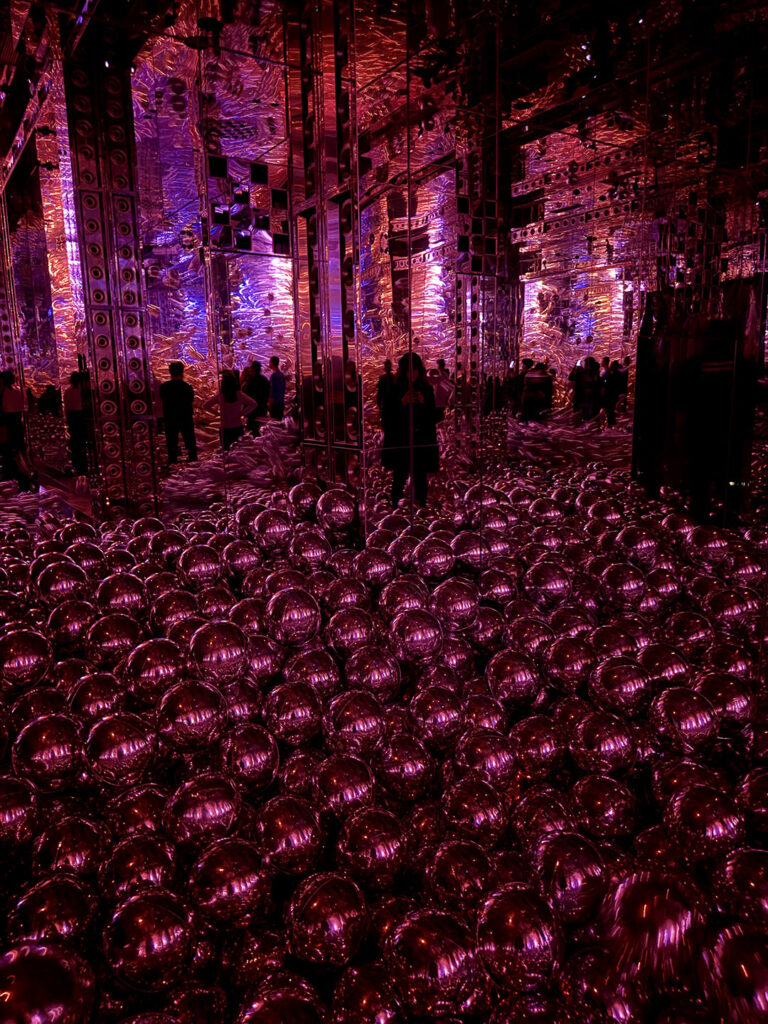
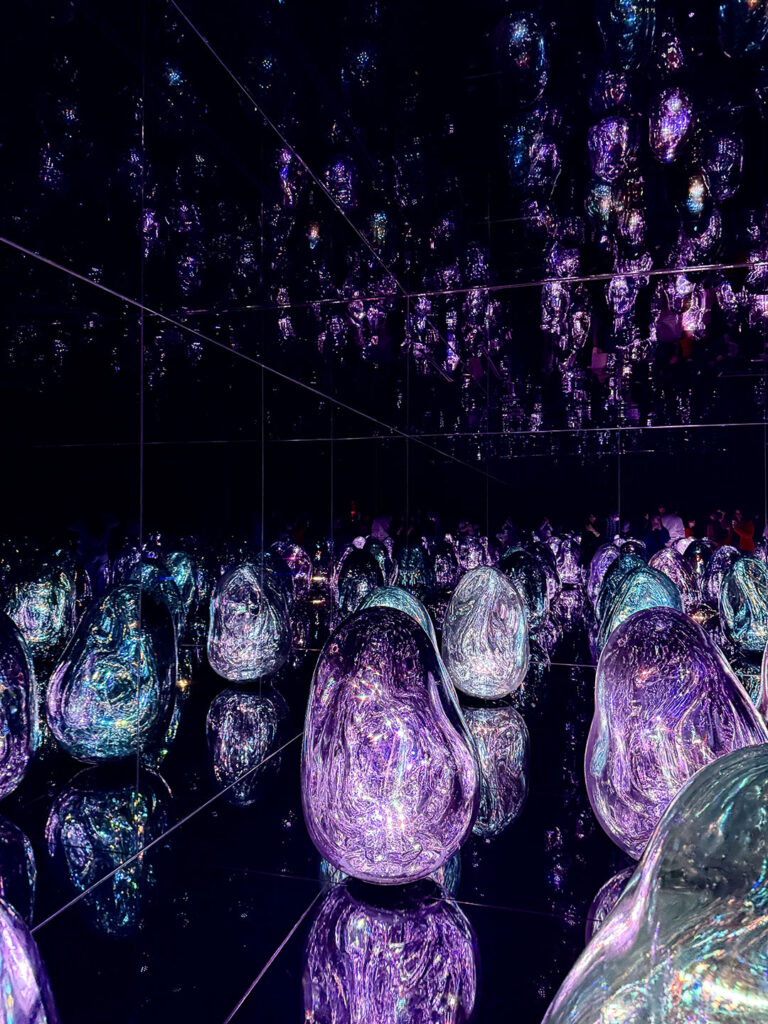
This is where you’ll find the majority of the artworks and likely where you’ll spend the most time. I’ll start with the exhibit that I think that most people have seen and wanted to experience before coming here, and that’s ‘Morphing Continuum’. Its a mirrored space full of lightweight shining spheres that create a swirling vortex at certain times within the space. At other times, you will be required to stand at the side of the room as the spheres spread out within the room, but it is such a brilliant ‘sculpture’ space to be a part of. The website describes it as: “Even when people fully immerse themselves in this sculpture, its existence remains intact. If broken by people, it naturally restores itself. Even if people try to move or push this floating entity, they cannot do so. Physical human actions cannot move the sculpture.”
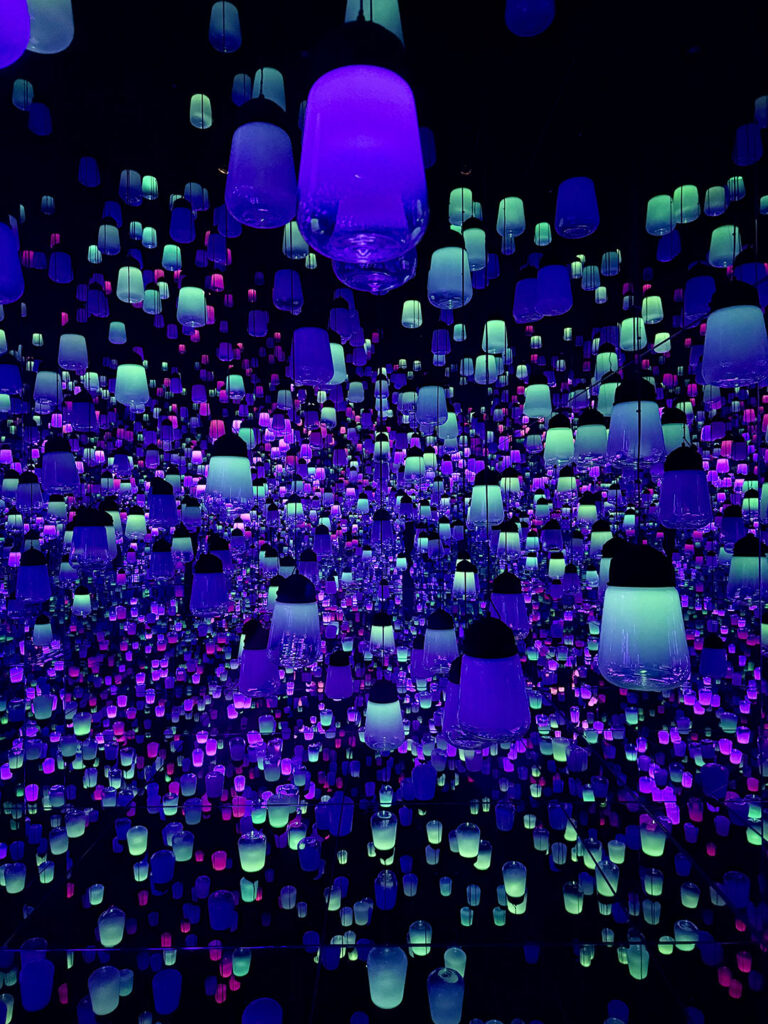
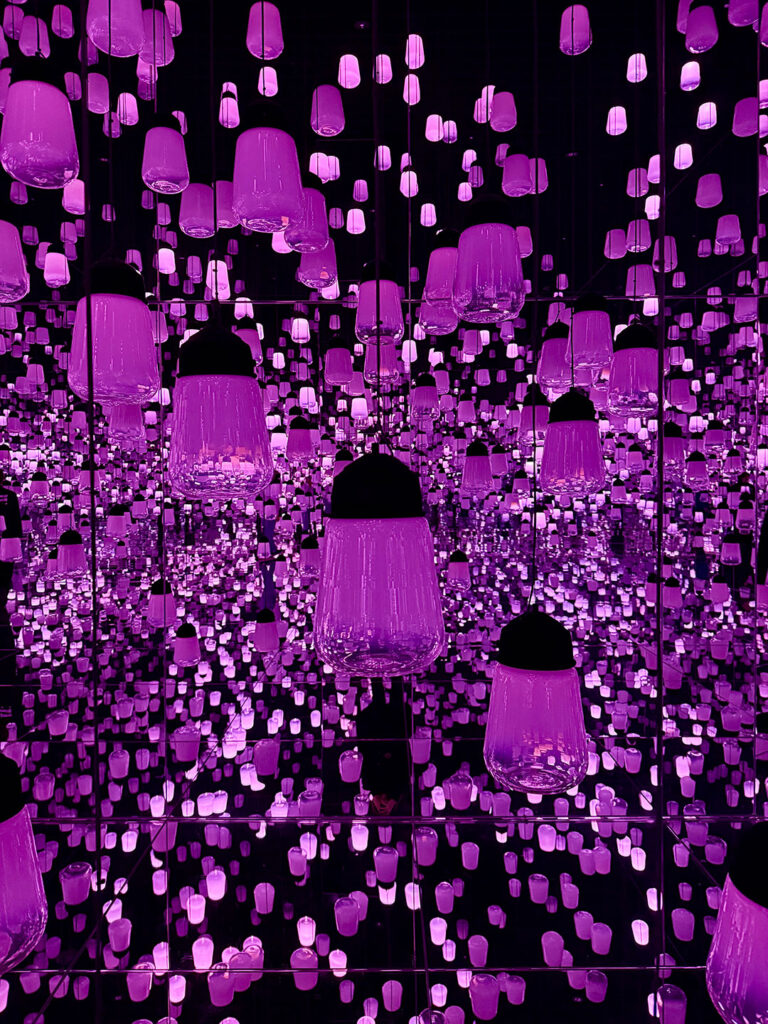
I always love the dark mirrored rooms filled with lights or spheres, so the ‘Forest of Resonating Lamps’ was definitely one of my favourites. I was in the first slot of the day, so this room was super empty when I visited, making for a lovely experience. The lanterns float around and change colour, causing an amazing effect within the space.
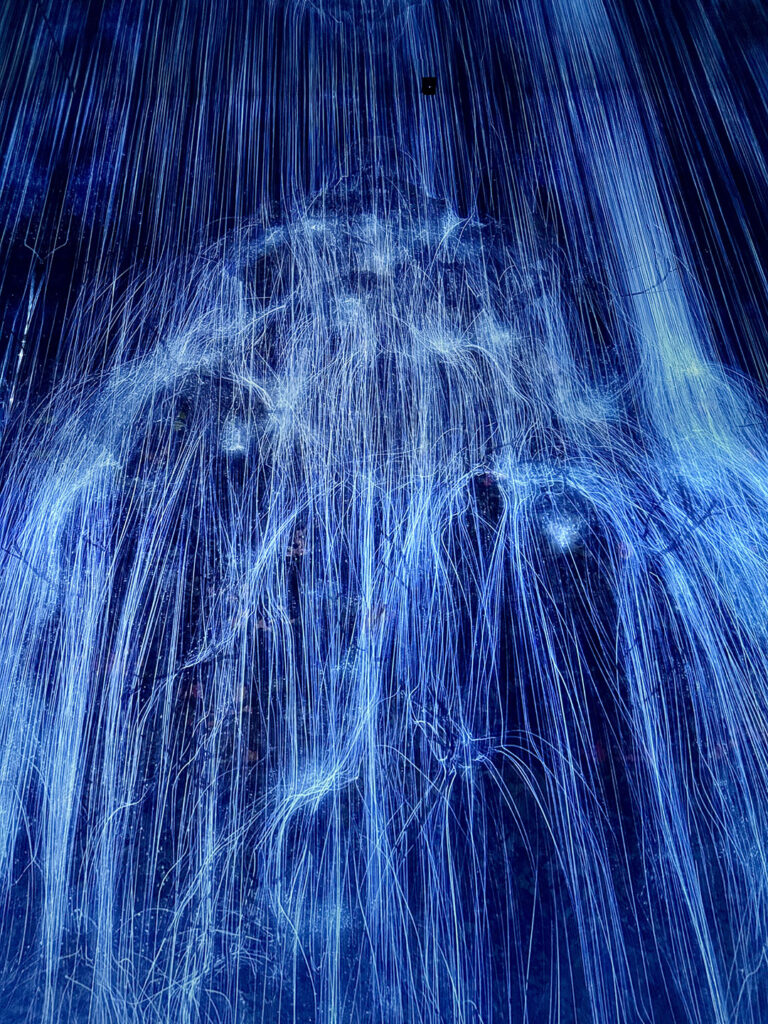
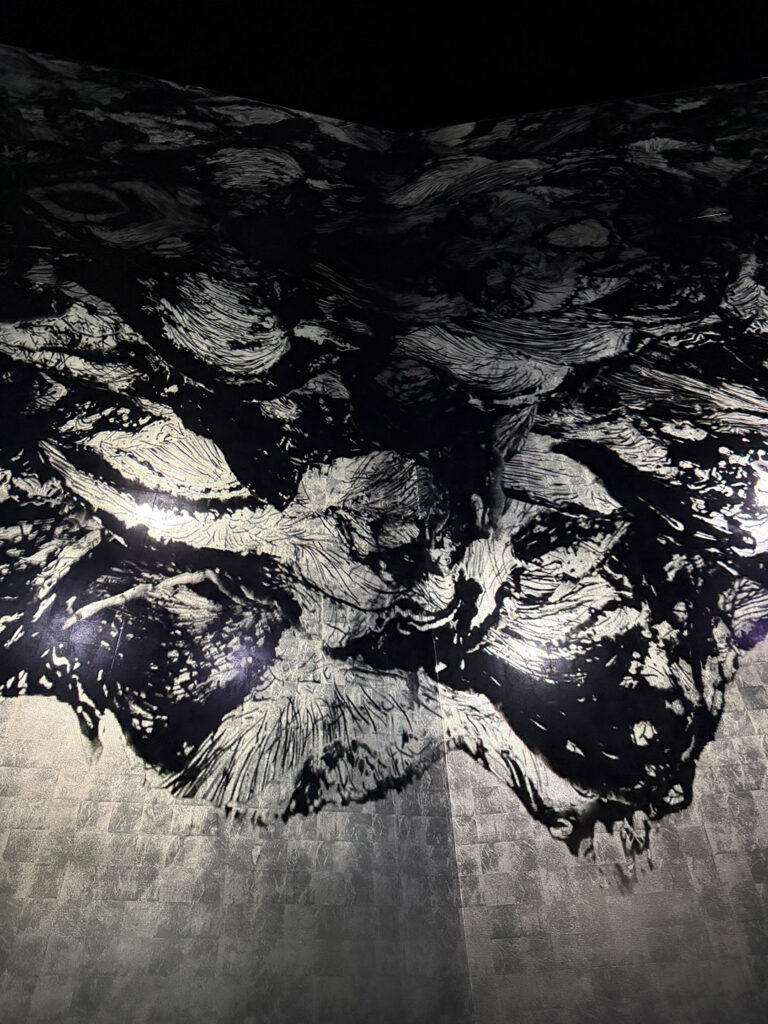
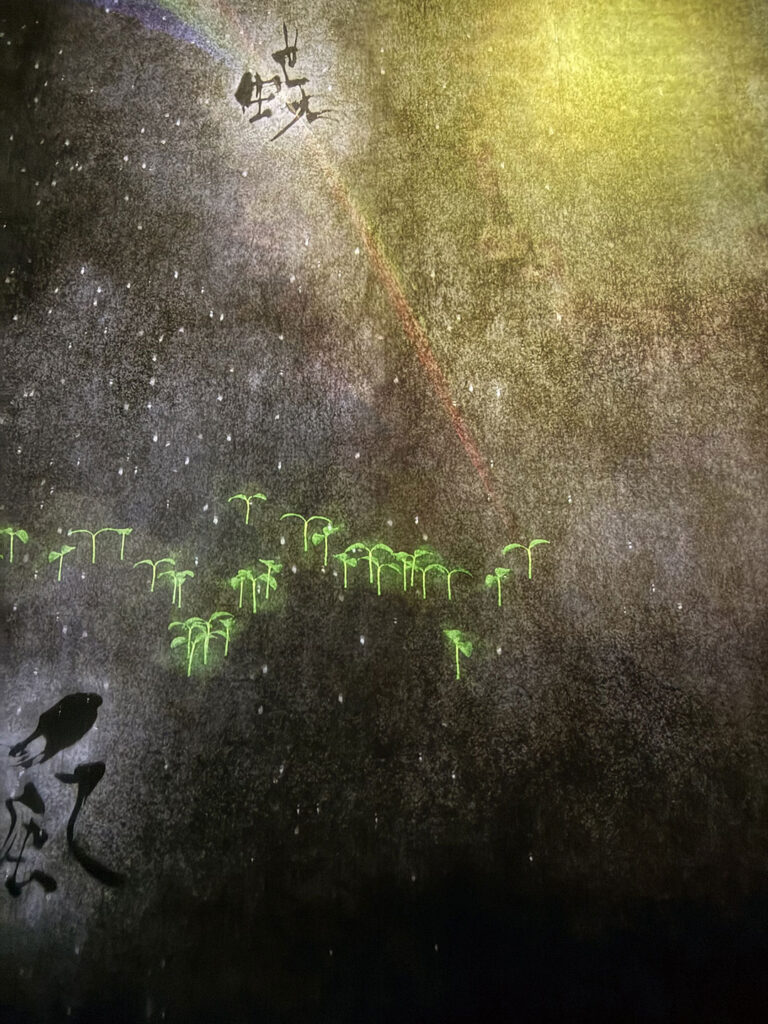
This floor also has an infinity room, just as in Planets and Borderless, with the long strings of lights changing between different ‘artworks’ within the space. They also have rooms filled with projections onto the walls, but these are different to ones that we’ve seen before. I quite enjoyed the ‘Memory Waves in the Sky’ towards the end of the floor, ‘Universe of Water Particles’ creating a waterfall on the wall, and I wish I’d known about interacting with the calligraphy characters in ‘What a Loving and Beautiful World’ because that causes weather to be affected by wind and birds and flowers and butterflies appear too. I will say that the ‘Traces of Life’ installation was incredible, but made me feel very motion sick!
Floor 2 – Sculpture and Painting
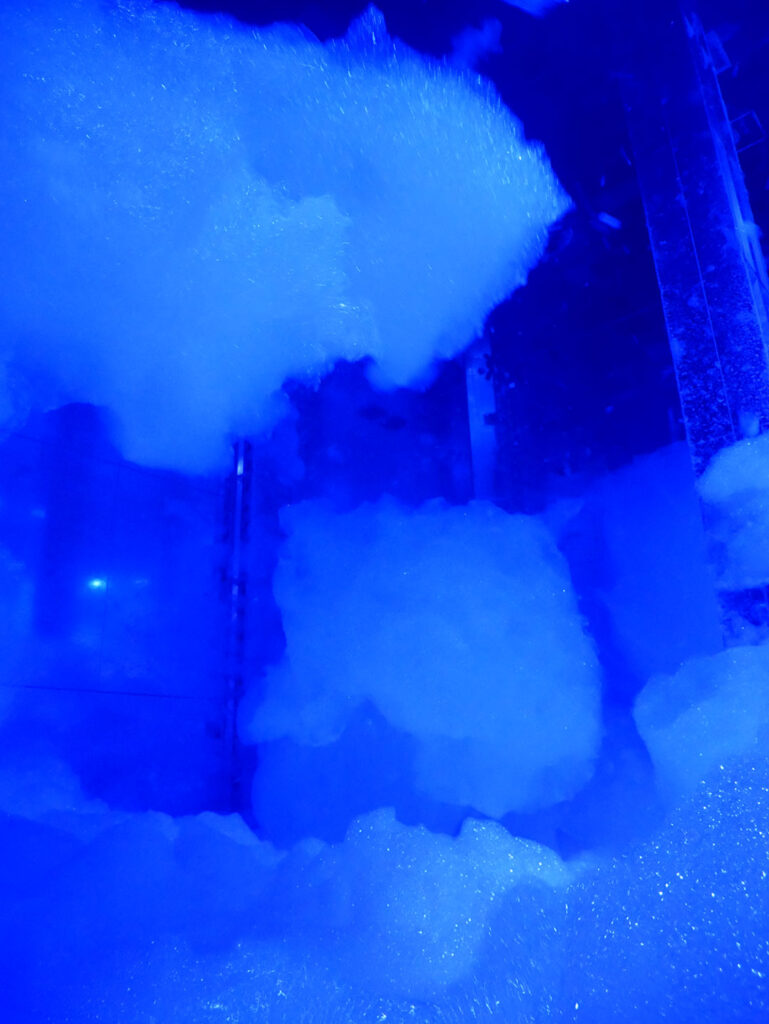
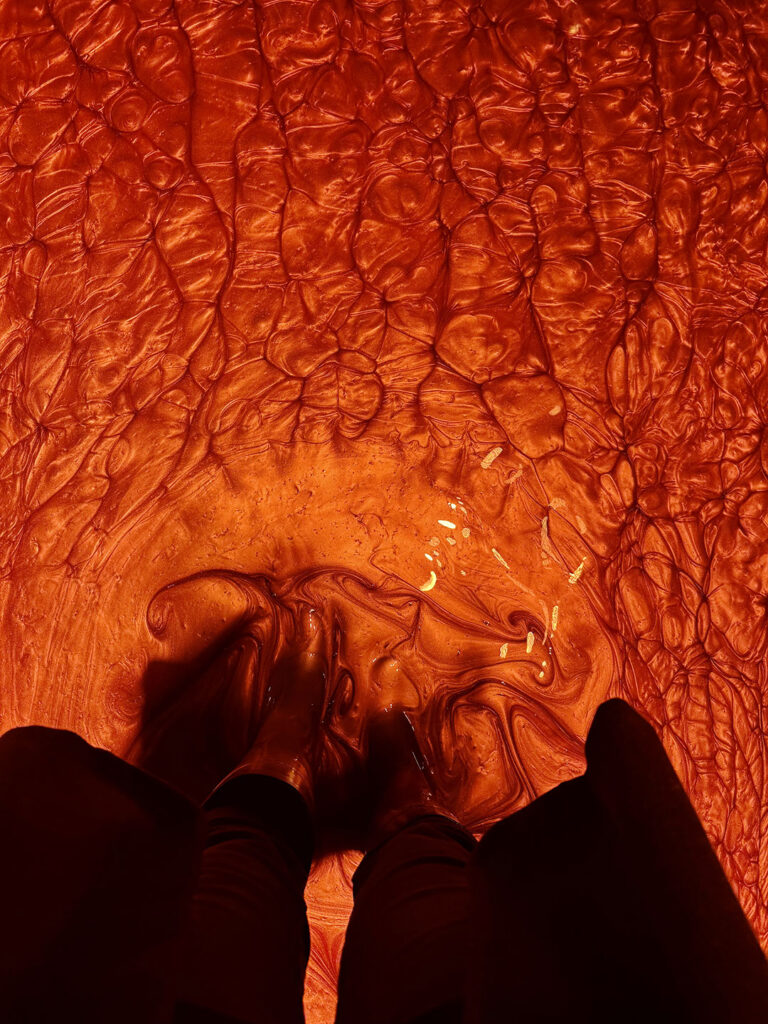
There are two main artworks here, both new, with one having multiple ways to experience it.
The first is called ‘Massless Amorphous Sculpture’ which is a floating sculpture made up of bubbles. It uses air and the people within the space to move around and it doesn’t really seem to touch the floor or ceiling at any point. There are restricted areas where the bubbles accumulate but otherwise you can move about the space as you wish. You do have to wear a mask and people with certain soap allergies are advised not to enter, so there must be something special in the bubbles that help it to do what it does. It’s such a fun space to be in and you can completely immerse yourself within the bubble clouds. Afterwards, you are vacuumed off to remove any traces of bubbles before you move on into the other spaces.
The other artwork is called ‘Transient Abstract Life and Return’ and this has two versions. A very colourful one you can just look at and admire, and the other that you can walk through (with the provided boots for a set time). You enter a glass box (a two way mirror) and walk through a swirling liquid that shimmers in the light. It kind of reminded me of a more liquid version of glittery slime. Obviously, it changes as you walk through it, so each participant views it differently. It was a fun experience, but I’m not sure I’d be queueing to do it again.
Floor 3 – Megaliths
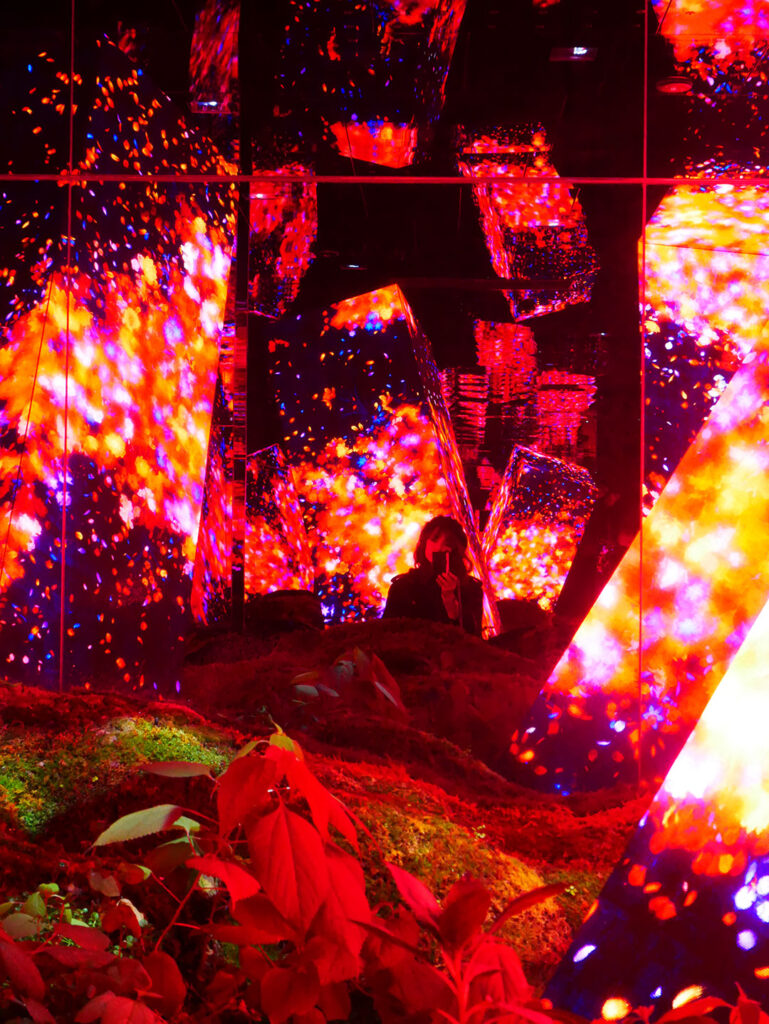
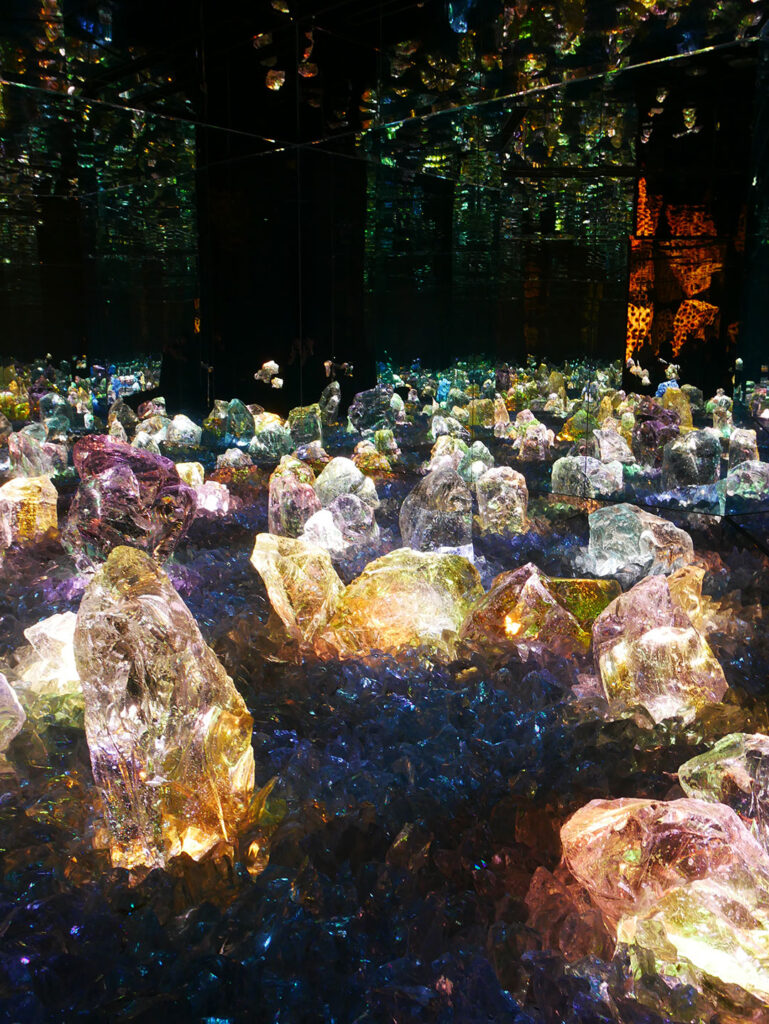
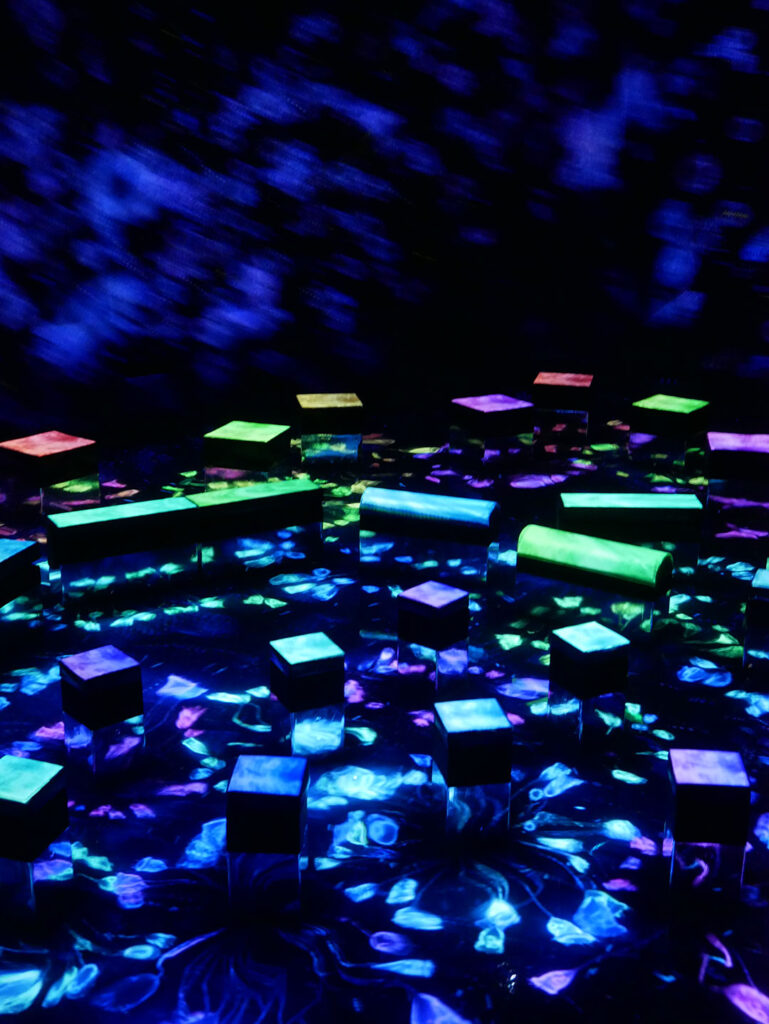
This floor made me feel like I’d landed on another planet, full of cuboid structures (the megaliths) that jutted out of a bed of real moss and crystals that did the same. The crystals went from sitting on the moss to just a mass of different sized crystals that changed colour every so often. This was a bit of a maze and I had to go round a couple of times to make sure I’d found everything that there was to experience.
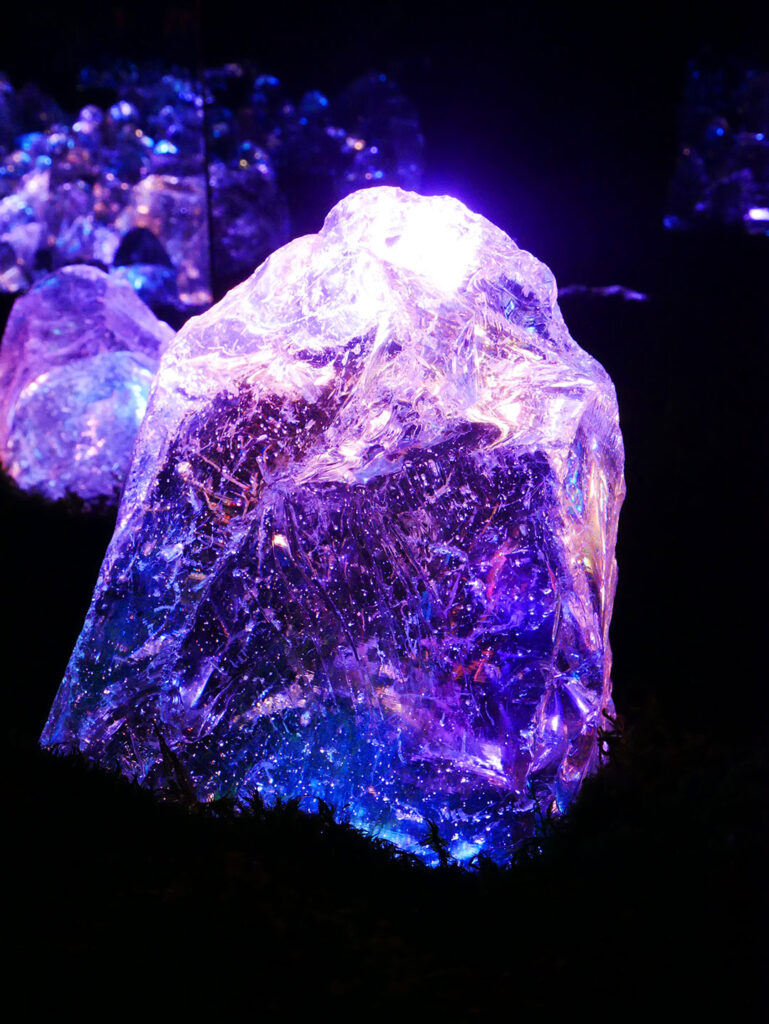
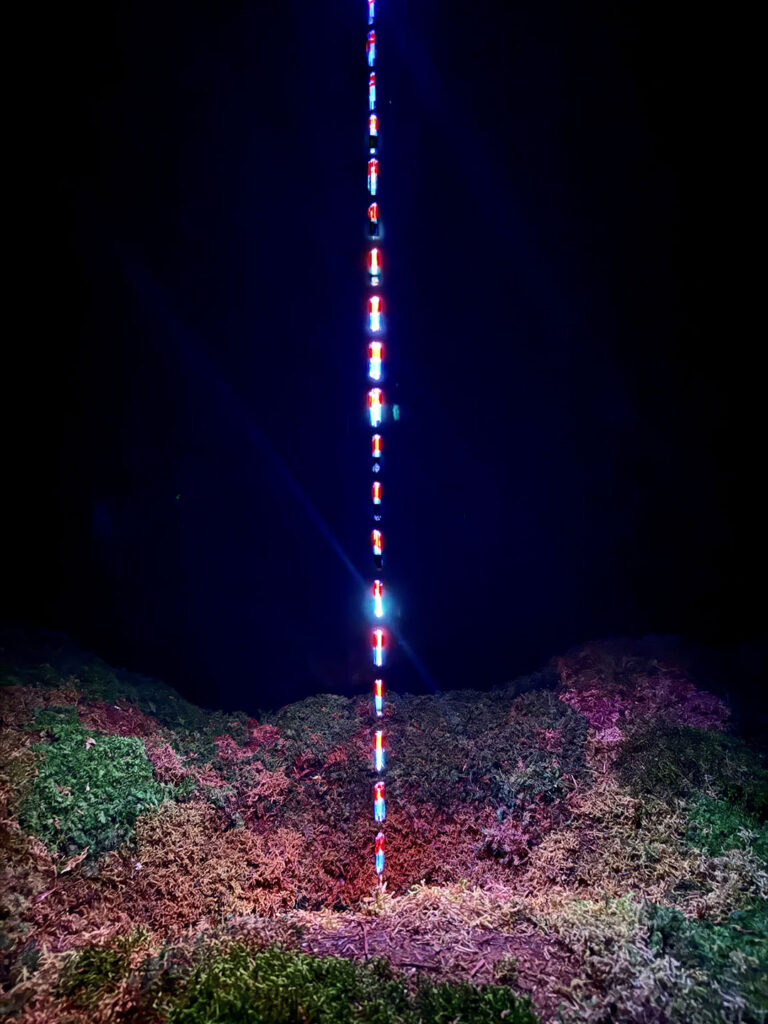
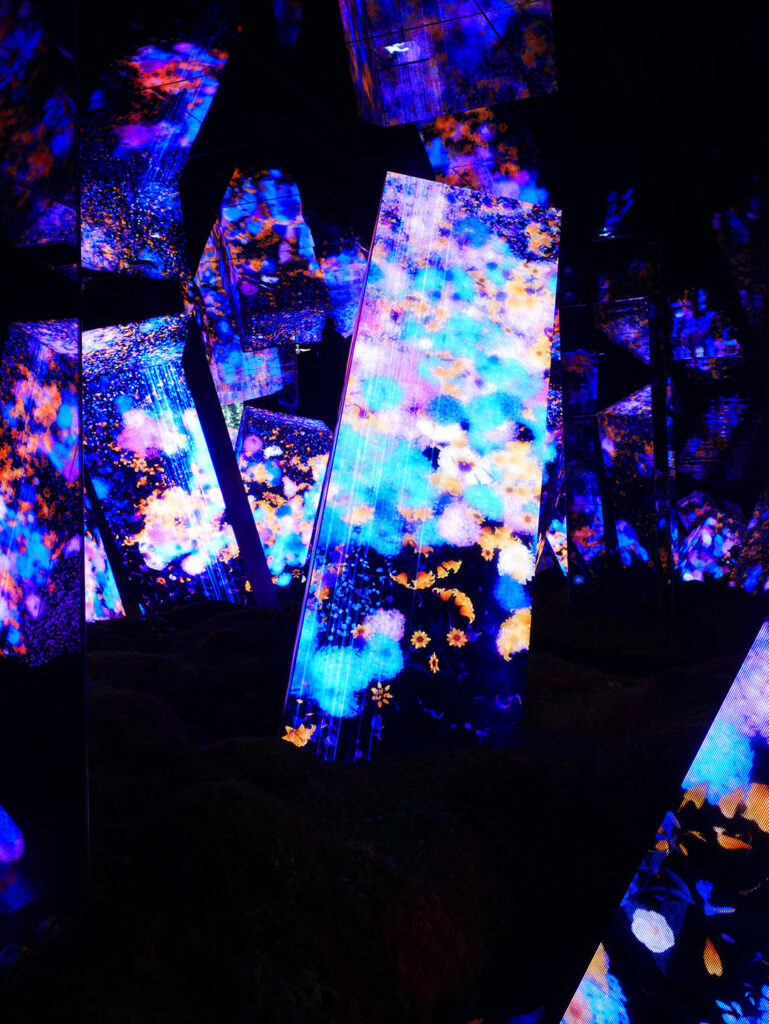
The ‘Megaliths’ reminded me of the room of blocks in Borderless, where the artwork on them changed over time, but the space they were in and the fact that they were surrounded by real moss really affected my experience. It linked with the crystals in the Sea of Solidified Light and I loved this whole space a lot. The moss area itself was called ‘Eternal Existence in the Sun and Rain’ and was dotted with other small plants and occasionally you would get streams of water that would run down and change colours in the light; so beautiful. There was also a little space where one stream of water ran down changing in the light constantly, so that you can always see one.
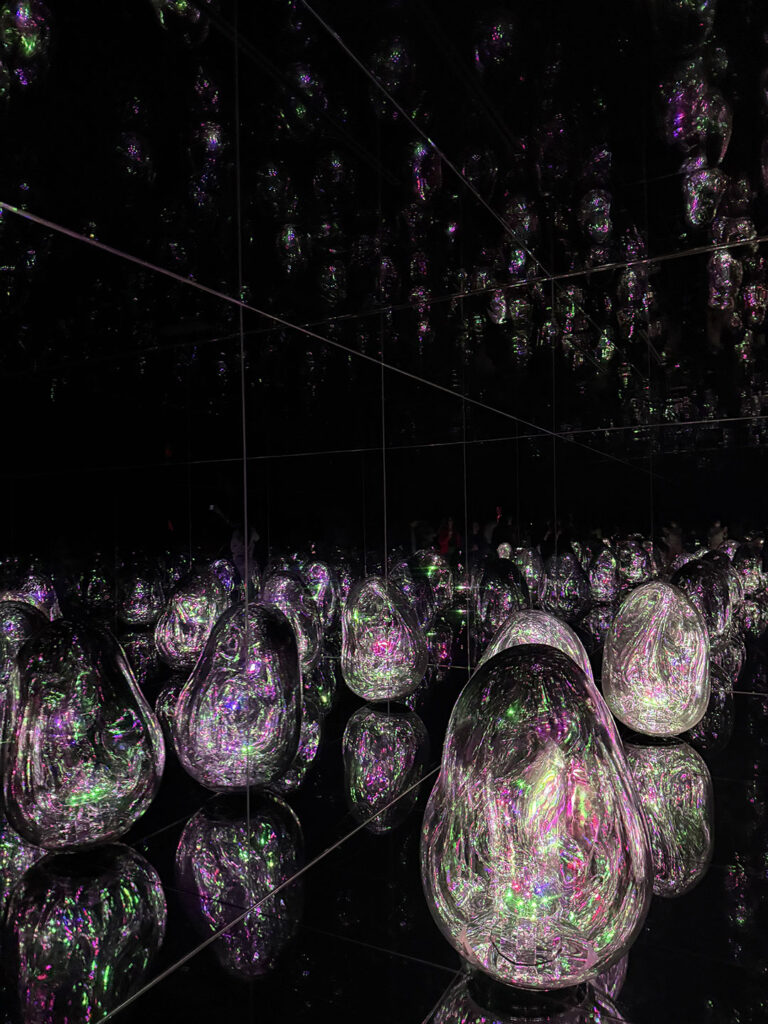
There was a room off to the side filled with the familiar bean/ovoids from both the Botanical Gardens and Planets. This room was less interesting than both of those spaces, but you were able to really interact with all of them while walking through the space. At Planets they were more of an exhibit, while in the Gardens you could touch them, but you couldn’t really walk through the space surrounded by them, so this was kind of a new experience. They change colour as people interact with them in the space, so it’s always different.
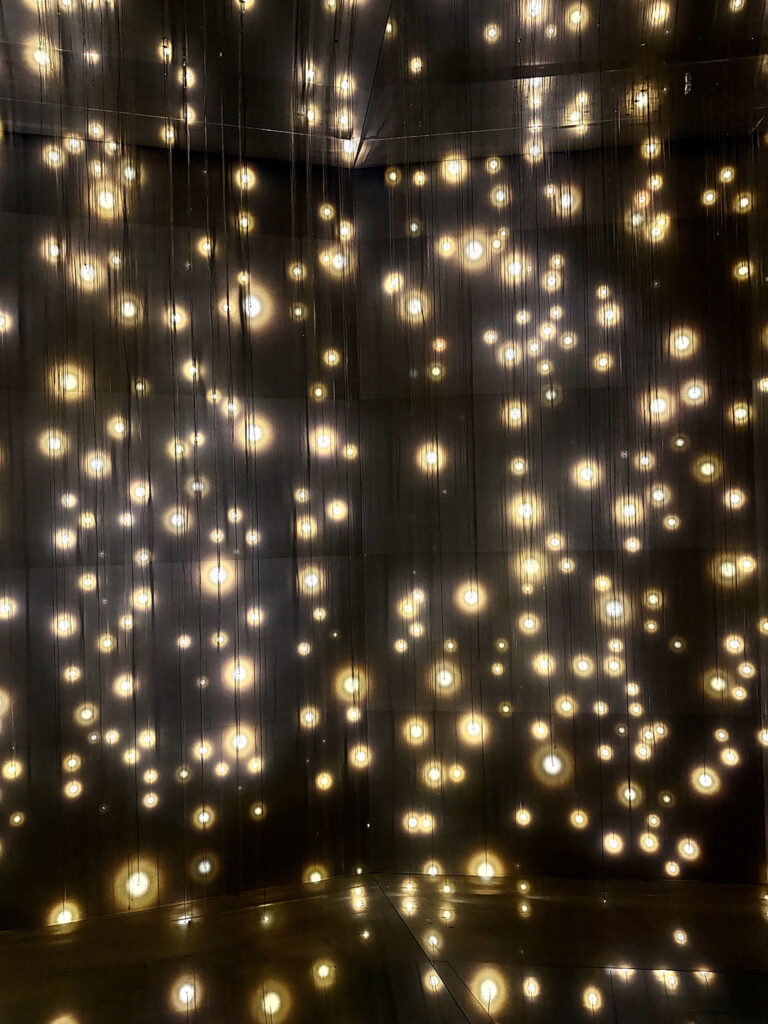
Another new experience was ‘Massless Suns and Dark Suns’. This is all about what we perceive to be real, but in actuality does not exist. The little lights make spheres of light and dark, with the dark not being able to be captured on camera. The spheres are not real, but we can see them; it’s an interesting way of experiencing light and what it can do within a space.
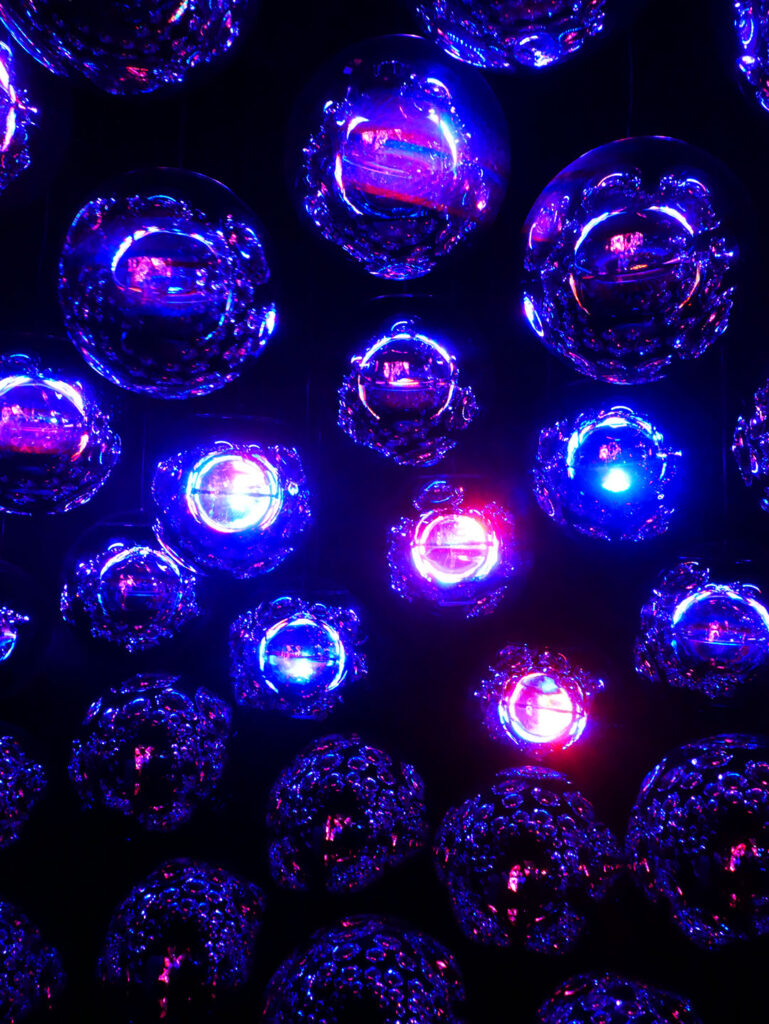
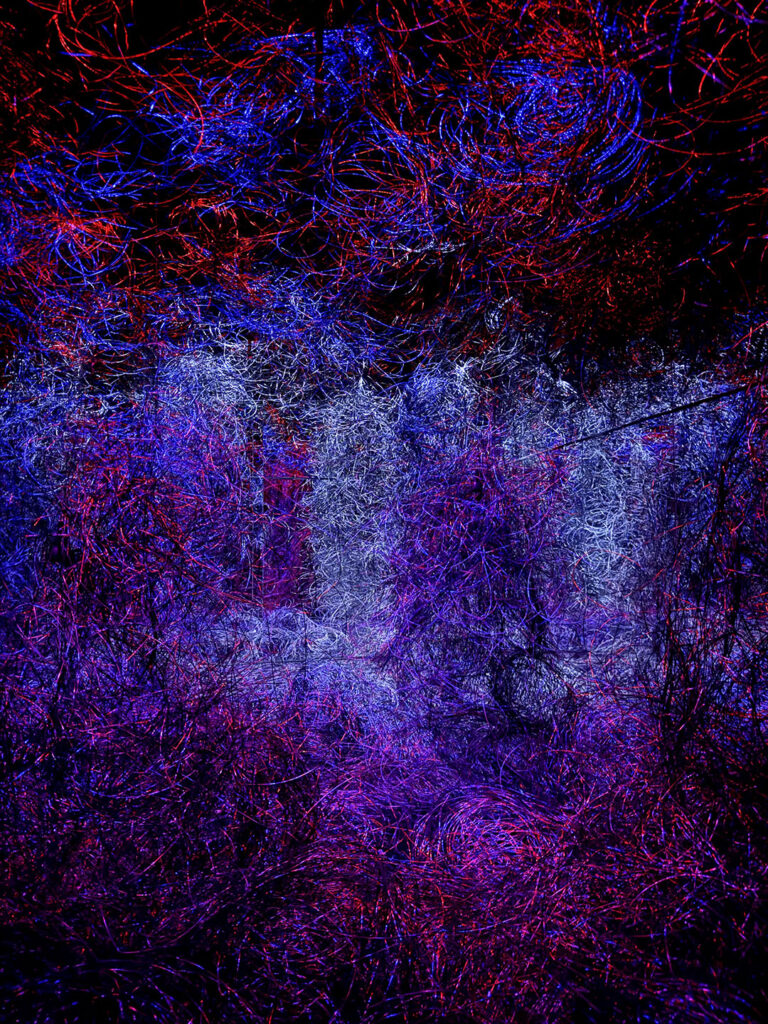
I also enjoyed both the ‘Spherical Crystallised Light’ (a room of spheres reflecting light) and ‘Strata of Traces’. I’m going to be honest, I do not know what the latter of those two was. It appeared to be swirling masses of thin wires that changed in the light, but whatever it was, it was fascinating to watch and to try and capture in a photograph. I honestly felt like I had found myself in a mass of something floating in space.
Floor 4 – Athletics Forest
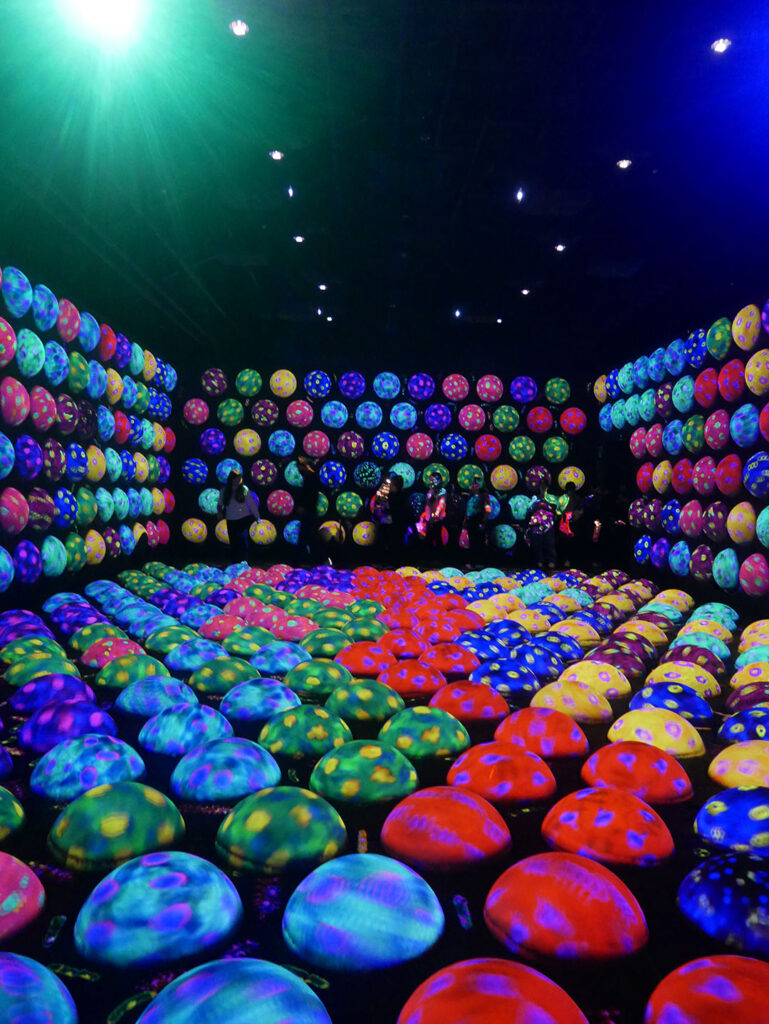
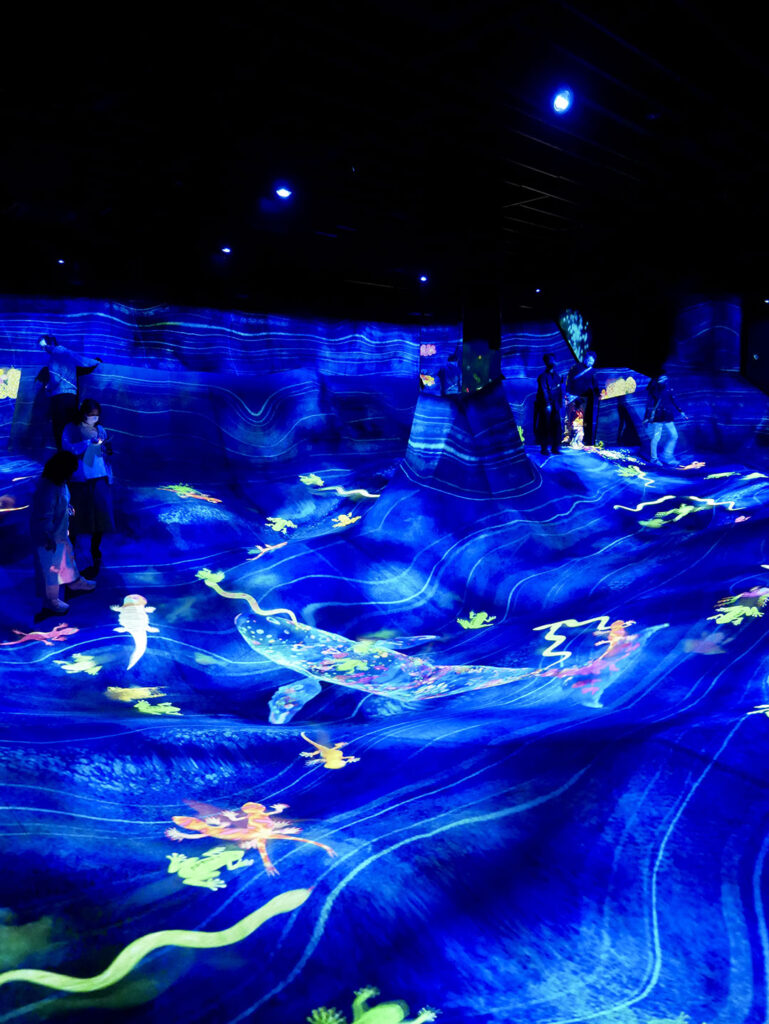
I’d say that this floor is very similar to the one in Planets, although it’s set out differently. I think I actually preferred this one compared to Planets, although there was an age restriction on the Stepping Stones here in Kyoto, which I was too old for! The Future Park area had the Sketch Ocean similar to Borderless and then the Little People room that you could find in Planets. If you want to see this area in more detail, check out my teamLab Planets post. The museum in Kyoto doesn’t have the Catching and Collecting Forest though, so if that interests you, you’ll either have to try teamLab Planets in Tokyo or teamLab Forest in Fukuoka. The one exhibit that’s different is ‘Floating Cosmic Spheres’, which is a mirrored room containing big inflatable spheres with lit up designs on them that you can interact with in the space. There are rules about what you can do and how long you can be in there for though.
A little admin… You’ll be required to put your smaller bags in lockers before starting, but they’re free and available for the entirety of your visit. If you have suitcases, you’re probably better off finding a locker at the station before you come, as there are minimal chain locks. Flat, closed-toe shoes are recommended due to some of the spaces and environments (especially in the Athletics Forest where you’ll be given rental shoes if your footwear isn’t acceptable) and if you want to feel the art and environments completely envelop you, then monotone clothes (preferably light coloured) are better as you’ll be more like a canvas for the projections and light. I was in all black this time, but I do think a paler colour works better!
If you want a specific time slot, you can book your tickets starting at around 2-3 months before (the whole of August is available on May 29th), and although not guaranteed you can probably still find some tickets available closer to the time too. Tickets have dynamic pricing, so popular days and times will be more expensive, but the calendar is handily colour coded for you to check. I’d say you need a minimum of 3 hours to explore the space at a leisurely pace, so make sure to factor that in to your plans.
As always, I don’t think pictures do the exhibits justice, so I’ll make sure to add videos to my Instagram @thelittleedition and highlight them for future viewing!
Do you think you would visit?











Leave a Reply